Is Hydro Jetting Safe for Older Pipes?
Hydro jetting is safe for most older pipes in Lake Forest when pressure is dialed down and the line is camera-checked first. Here is how we decide.
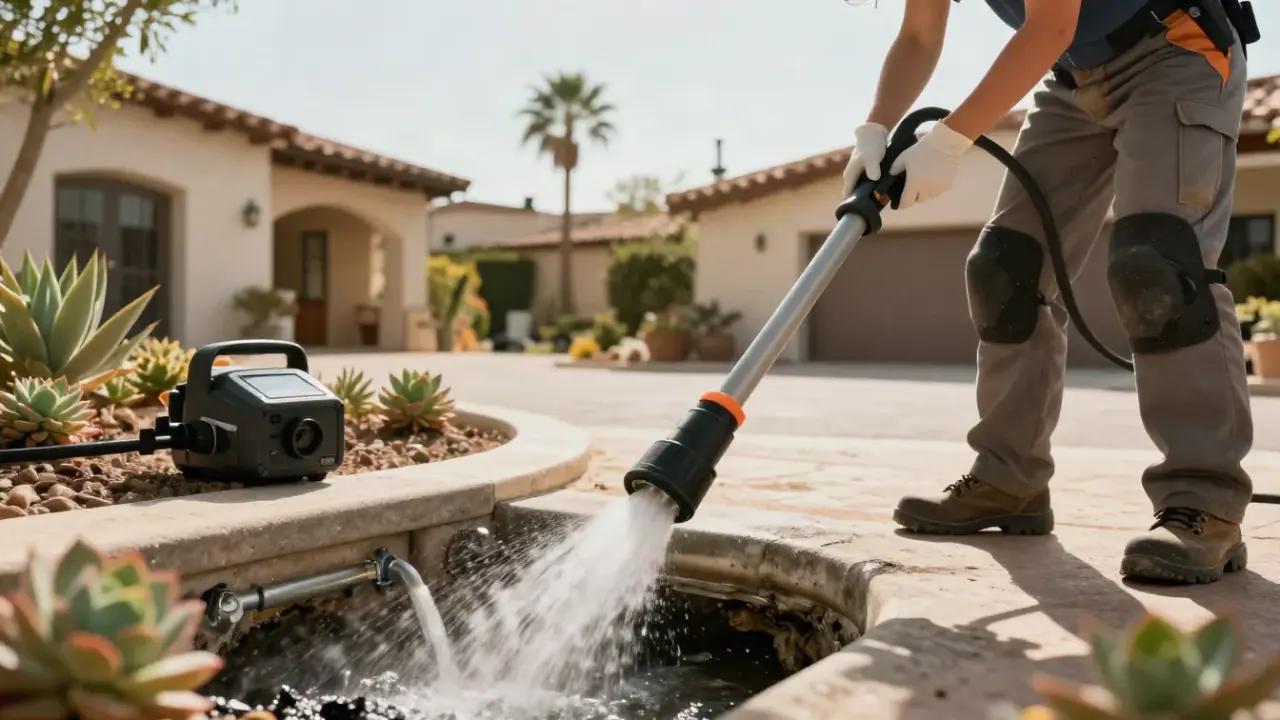
Yes - hydro jetting is safe for most older pipes in Lake Forest when the technician drops the pressure to match the pipe material and runs a camera through the line first. The damage stories you have heard are almost always the result of full-blast jetting on a line nobody inspected, or on a pipe that was already cracked. Is hydro jetting safe for older pipes Lake Forest CA homeowners ask about? For cast iron, clay, and Orange County's older ABS plastic, the answer is usually yes with the right setup.
What follows is how we actually decide. We will cover what the water does inside the pipe, which materials hold up, when snaking is the smarter call, and the specific warning signs that mean you should stop and call someone before anything goes down the cleanout.
The Short Answer on Hydro Jetting and Old Pipes
Hydro jetting is a drain cleaning method that pushes a high-pressure stream of water - usually 1,500 to 4,000 PSI - through a flexible hose with a forward-facing nozzle to scour grease, scale, and roots off the pipe walls. It is needed when a line keeps re-clogging because snaking only pokes a hole through the blockage instead of cleaning the whole interior.
For most homes built in Lake Forest between the late 1960s and the 1990s, the drain lines are cast iron, clay, or early ABS. All three can be jetted safely. The pressure matters more than the age of the house. A 1972 cast iron line in good condition handles 2,000 PSI fine. A 2005 ABS line with a hairline crack from ground movement does not handle 4,000 PSI - and neither does a brand-new pipe.
We run video camera drain inspection Lake Forest CA on every older line before we jet it. That camera tells us three things in about five minutes: the pipe material, the wall thickness, and whether there is already a break or offset joint. If the line is sound, we jet it. If it is not, we tell you what it needs instead.
What Hydro Jetting Actually Does to a Drain Line
The nozzle on a hydro jetting hose points backward at a slight angle, which is what pulls the hose forward while the water blasts the pipe wall behind it. Think of it as a pressure washer turned inside out. The water hits the buildup at roughly a 30 to 45 degree angle, peeling grease and scale off the wall rather than drilling through the middle of it.
That is the difference between jetting and snaking. A snake cable cuts a channel. A jetter cleans the full circumference of the pipe. On a 4-inch main line, that is the difference between a drain that flows for three weeks and one that flows for two years.
Three variables control whether the process is safe:
- Pressure (PSI). We run 1,500 to 2,000 PSI on older cast iron and clay, and up to 4,000 PSI on newer schedule 40 ABS or PVC.
- Flow rate (GPM). Usually 4 to 8 gallons per minute. Higher flow flushes debris out; too much flow on a weak line can stress joints.
- Nozzle type. A penetrating nozzle for hard blockages, a flusher nozzle for soft grease, and a chain cutter for roots.
Get those three right and the pipe is not damaged. Get them wrong - full pressure on a 50-year-old line with no camera check - and you can blow out a joint that was already failing.
Which Pipe Materials Can Handle Hydro Jetting
Cast iron, clay, ABS, PVC, and orangeburg are the five materials we run into across Lake Forest and the surrounding foothill neighborhoods. Here is how each one behaves under a jetter.
Cast iron
Cast iron is the workhorse of mid-century California plumbing. A 4-inch cast iron main in decent condition handles 2,000 PSI without complaint. The risk is not the pipe wall - it is the joints. Older cast iron uses leaded oakum joints that can weep under pressure if the soil around the pipe has shifted. We camera the line first and jet at reduced pressure if we see joint separation.
Clay and orangeburg
Clay tile is common in homes built before 1975. It is brittle. Tree roots find the joints and pry them apart, and once a joint is offset, high pressure can push the pipe apart further. We jet clay at 1,500 PSI or lower, and we stop the moment the camera shows a shifted joint. Orangeburg - the tar-paper pipe used in some 1950s subdivisions - should not be jetted at all. It collapses.
ABS and PVC
Modern plastic is the most forgiving material. Schedule 40 ABS and PVC handle 4,000 PSI routinely. The only real risk is a joint that was never glued properly, which the camera will show as a visible gap.
Hydro Jetting vs Snaking Old Pipes in Lake Forest
Snaking and jetting solve different problems, and on an older line you often need both. Snaking - also called cabling or rodding - uses a steel cable with a cutting head to break through a blockage. It is the right tool for a single hard clog, a foreign object, or a line where the camera shows a structural problem that makes pressure unsafe.
Jetting is the right tool when the line keeps backing up because grease, scale, or roots have coated the walls. It is also the standard step after snaking a root intrusion, because the snake opens the channel and the jetter flushes the debris out.
Here is the rule we use: if the line has backed up more than twice in a year, snake it first to confirm the blockage, camera it, then jet it. If it is a first-time clog with no history, a snake is usually enough. For homeowners who want the full picture on drain snaking in Lake Forest California, that page walks through what the cable actually does inside the pipe.
Is Hydro Jetting Safe for Cast Iron Pipes in Lake Forest CA?
Cast iron is safe to jet when the wall thickness is still intact and the joints are tight - which is the case for most cast iron mains we inspect in Lake Forest, Foothill Ranch, and Portola Hills. The failure mode people worry about is a pipe that has already rusted through from the inside. Cast iron loses roughly 1 millimeter of wall thickness per decade in aggressive soil, and a 4-inch pipe starts with about 6 millimeters of wall. A 1970 line that has been in wet soil for 55 years can be down to 1 or 2 millimeters in spots.
You cannot see that from the outside. You see it on camera. When we run the camera and the wall looks pitted or flaking, we do not jet. We recommend drain pipe repair Lake Forest CA or a spot repair on the section that is failing, then jet the healthy sections afterward. That sequence protects the pipe and solves the clog.
For homes in the older pockets of town - the streets off El Toro Road built in the early 1970s, and the original tracts near El Toro drain cleaning - cast iron is the norm and jetting is routine. We just do it at 1,800 PSI instead of 4,000.
Can Hydro Jetting Damage Old Pipes in Lake Forest?
Yes, hydro jetting can damage old pipes - but only when it is done without an inspection, at full pressure, on a line that was already compromised. The damage is not caused by the water itself. It is caused by pressure applied to a pipe that could not take it.
The specific failure modes we see:
- Blown joints. High pressure on a cast iron line with separated oakum joints pushes water into the soil around the pipe. You get a wet spot in the yard and a sinkhole forming over the line.
- Cracked clay tile. Clay is brittle. A shifted joint under 3,000 PSI becomes a shattered tile.
- Collapsed orangeburg. Tar-paper pipe has no structural strength. Any jetting collapses it.
- Root-wrapped pipe rupture. If roots have wrapped the pipe and entered through a crack, high pressure can push the crack open further.
Every one of those is preventable with a camera inspection and matched pressure. That is why we never quote a flat jetting price over the phone for an older home. We look first.
What to Watch Out For Before Anyone Jets Your Line
If a drain company shows up and hooks a jetter to your cleanout without running a camera first, stop them. That is the single biggest red flag in this trade. Jetting blind on an older line is how pipes get broken and how homeowners end up paying for a sewer replacement they did not need.
Other things to watch for:
- No cleanout access. If the technician wants to pull a toilet and jet through the closet flange, ask why. A proper sewer cleanout installation Lake Forest CA is a two-hour job that makes every future cleaning safer and cheaper.
- Full pressure on a first visit. A reputable tech starts low and works up. Full blast on the first pass is a sign they are guessing.
- No mention of the pipe material. If they cannot tell you whether your main is cast iron, clay, or ABS, they have not looked.
- Jetting a line with active roots and no follow-up. Roots grow back. If the line has root intrusion, you need tree root removal from drain lines Lake Forest CA or a recurring maintenance schedule, not a one-time jet.
Typical 2026 pricing in this area runs $350 to $650 for a camera inspection plus hydro jetting on a residential main line, and $150 to $300 for a straightforward snake. If a quote for jetting comes in under $200 with no inspection, that is a warning sign, not a deal.
When to Call a Professional
Call a professional the moment you see water backing up in a second fixture - a toilet gurgling when the shower drains, or the kitchen sink rising when the washing machine empties. That pattern means the blockage is in the main line, not a branch, and it is past the point where a plunger or a bottle of enzyme cleaner will help.
Other signals that it is time to stop DIY-ing:
- Repeated backups in the same fixture within 30 days.
- Sewage smell in the yard or at the cleanout.
- Slow drains throughout the house, not just one.
- Any home older than 1975 with a main line that has never been camera-inspected.
Our team at Lake Forest Drain Cleaning handles the inspection, the jetting, and the repair in one visit when the line allows it. We serve the whole city and the surrounding foothill communities, including Foothill Ranch drain cleaning and the neighborhoods up the hill. If you are not sure whether your line is a jetting candidate, we will tell you straight after we look at it.
For a broader look at what we do across the city, our Drain Cleaning Lake Forest CA page covers every service we run.
Frequently Asked Questions
Is hydro jetting safe for old pipes in Lake Forest CA?
Yes, for most lines. We jet cast iron, clay, and ABS safely in Lake Forest when pressure is matched to the material - typically 1,500 to 2,000 PSI on older cast iron and clay, up to 4,000 PSI on newer plastic. A camera inspection comes first on every home built before 1990.
Can hydro jetting damage my pipes in Lake Forest?
It can, but only when the line is jetted blind at full pressure. The realistic risks are blown cast iron joints, cracked clay tile, and collapsed orangeburg. A five-minute camera check eliminates all three risks. We have never damaged a line we inspected first.
Should I hydro jet old pipes in Lake Forest California?
If your line has backed up twice or more in a year, yes. Repeated clogs mean buildup on the pipe walls that snaking cannot remove. If it is a first-time clog, a snake is usually enough. We camera the line and tell you which one you actually need.
How often should older sewer lines be hydro jetted?
Every 18 to 24 months for homes with mature trees nearby, and every 24 to 36 months for lines without root intrusion. Homes in the older tracts near El Toro Road and the Lake Forest Keys tend to need the shorter interval because of mature sycamores and eucalyptus.
What pressure is safe for cast iron drains?
We run 1,500 to 2,000 PSI on cast iron. Anything above 2,500 PSI on a 50-year-old line with leaded joints is asking for trouble. The camera tells us whether the joints are tight enough to take even 2,000.
Get Help With Drain Cleaning in Lake Forest
If your older home has a drain that keeps backing up, we will camera the line, tell you what it is made of, and jet it at the right pressure - or recommend a repair if that is the honest answer. Call Lake Forest Drain Cleaning at (949) 670-0422 and we will get your line flowing again.